


Every organization needs a form of governance and structure. Countries have their prime ministers and presidents; cities, their mayors; and corporations, their CEOs. Structures within organizations of all sizes help them maintain their identity, vision, and order.
This is true not only for secular institutions but also for religious organizations like the Capuchin Order.
The Capuchins’ organizational structure is outlined in its Constitutions. There is a general minister, currently Fr. Robert Genuin of Italy, who was elected in 2018 and resides in Rome. He animates the life and work of the Order in collaboration with the provincial ministers, who govern the local jurisdictions of Capuchin communities that we call provinces. While there is a hierarchy that facilitates the governance of the Order and its provinces around the world, an egalitarian spirit is maintained between our friars who are servant-leaders and all the brothers.
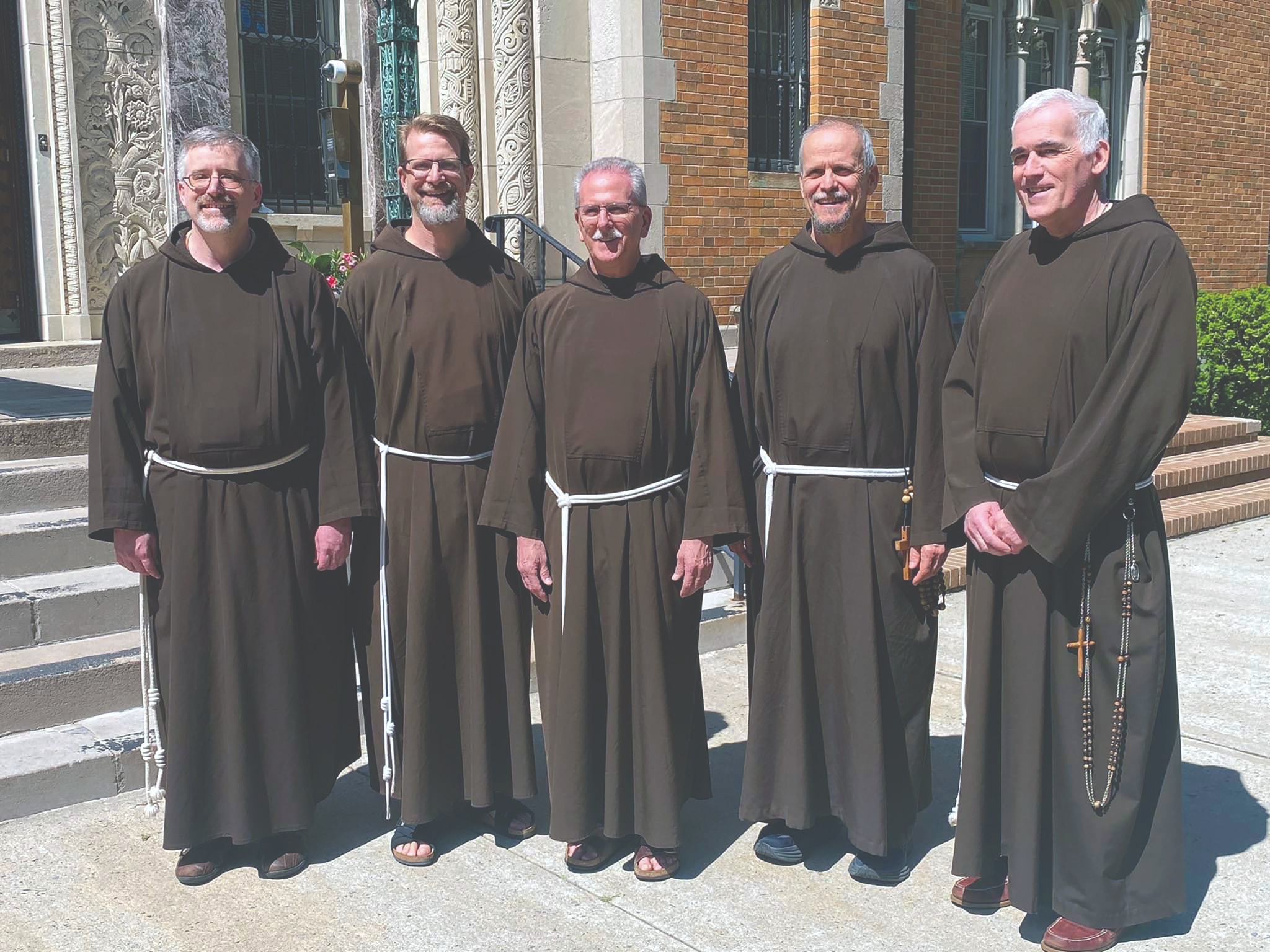
The current provincial minister of the Province of St. Mary is Fr. Robert Abbatiello. He was elected in May at the provincial chapter, the triennial gathering of the friars. He succeeded Fr. Michael Greco, who served as provincial minister for two three-year terms.
Father Michael recently shared some insight into the practical duties of a provincial minister with The Capuchin Journey. “The role of the provincial minister is one of both administrative leadership and spiritual animation.,” he said. “Our general minister in Rome has ultimate oversight, but each provincial minister has responsibility for his own province and the custodies and missions associated with it. The general minister does not involve himself in local matters unless necessary. Therefore, I was responsible to oversee the healthy living and effective working of all of the friars in New York and New England as well as Japan and Guam. Regarding our friars working in parishes, it is up to the provincial minister to assign them and to support them as they live Capuchin life; however, the local bishop is their actual employer.”
Each province has its own history, character and needs; consequently, the specific responsibility of each provincial minister varies from one jurisdiction to another. Nevertheless, every provincial minister works hard to care for the friars at all stages of life, and to foster the recruitment and formation of new members.
Spiritual Leadership
The provincial minister provides guidance for the friars’ prayer life, encourages study of Franciscan spirituality, and helps them adhere to the vows of poverty, chastity, and obedience. “I always sought to inspire the men to a richer, deeper Franciscan life,” said Father Michael. “I encouraged a prayer life within the friaries that included a healthy amount of spiritual reflection, also making sure there was a yearly retreat available for each of our brothers. For those who could not travel, we hosted Internet events around certain religious holidays.”
Administrative Oversight
The provincial minister supervises the management of the friaries, properties, and finances, ensuring responsible stewardship of resources. “Among my greatest challenges was, along with the provincial council, the task of balancing the provincial budget and stabilizing our finances,” said Father Michael. The Province needs to operate within its means while ensuring there are sufficient resources to cover the basic needs of the friars and their ministries. “No one becomes a Capuchin to be a financial administrator,” said Father Michael. “But we serve where and when we are called. I am grateful for the success we achieved in this area.”
Sometimes that call takes the provincial minister to Rome, where he may meet with the general minister. The provincial minister participates in regional meetings with fellow provincial ministers of the North American and Pacific Capuchin Conference. He provides updates on the state of the Province, both its achievements and its challenges. He communicates decisions and implements directives from leadership of the Order that affect the lives of the friars of the Province. The provincial minister represents the Province in gatherings among other religious communities and ecclesial organizations.
It is the provincial minister’s job to ensure that the friars live out the Gospel of Jesus Christ according to the Rule of St. Francis, the Capuchin Constitutions, and the norms of the Catholic Church.
Formation and Care of Friars
Friars come with different charisms, talents, needs, and personalities. Providing for their care is one of the most important tasks of the provincial minister. He oversees the initial formation of the new friars and the ongoing formation of fully professed members. Father Michael reflects: “Formation required lots of collaboration and consultation between the friars, myself, and the formation director for the Province, Br. Lake Herman, to create the healthiest environment for friars to thrive both personally and in ministry.”
Chief among the Capuchin charisms is fraternity. It is the provincial minister’s duty to foster and preserve the spirit of Gospel brotherhood among the friars. This involves promoting a culture of mutual support, understanding, and respect, encouraging regular community gatherings, times of communal prayer, and opportunities for fraternal bonding. It also means ensuring that our sick and elderly friars receive proper care and support. This is one of the areas that Father Robert has identified as a key focus for his term as provincial minister. Like his predecessors, he will coordinate with health care providers to ensure that appropriate accommodations and assistance are provided to our brothers who are most in need.
In consultation with the provincial council, the provincial minister discerns what works the friars are being called to do and where they are to serve. After considering the needs of the Church and community, the overall mission of the Province, and the gifts and talents of the friars, he assigns them to their places and ministries.
“Perhaps my greatest challenge, as collaborative as provincials are, was to have to make the final call on things great and small,” said Father Michael. “But we do what we are called to do for our Province and our brothers.”
Vocation Discernment
Fostering vocations is critical to the future of the Province and the Order. This is another area Father Robert has made a high priority. To better coordinate the vocation ministry with the provincial administration, Father Robert is moving the vocation office to the provincial headquarters in White Plains, N.Y.
Promoting vocations is to be every friar’s responsibility. “I hope to animate the friars to bolster our vocations through private prayer and Holy Hours,” said Father Robert. He encourages his brother friars to make a more public effort in this area by attending parish-level vocation events and to find any opportunity to encourage youth who might be discerning a vocation. “We mustn’t be afraid to approach young men and ask them if they are discerning a vocation. After all, that is what drew me to the Capuchins when I was in the fourth grade.”
The provincial minister, with input from the provincial council, evaluates candidates for admission to postulancy. Once candidates have been accepted into initial formation, the provincial minister, through his formation team, supervises initial formation and the new friars’ discernment of their vocation. The provincial minister has final authority to accept friars into first profession of vows and then final profession of vows.
Preparation
Being provincial minister is a job for which no friar could possibly prepare. “You don’t have the luxury of prepping for a role like this,” said Father Robert. “Like my brother friars, I came into this life to minister rather than administer.” But as they say, if you want to make God laugh, tell God your plans. Father Robert recalled: “On the final day of provincial chapter, I arrived at 8 a.m., and by 4 p.m., I was making my oath as provincial. It’s very humbling to think that my brothers chose me as their leader, but we have to trust that the Spirit is in charge.”
The responsibilities of a provincial minister are multi-faceted, encompassing spiritual leadership, administration, formation, and community building. We pray for Father Robert as he guides the friars of the Province to be ever more faithful to their Capuchin charisms while effectively carrying out their mission of service to God, the Church, and all people.