




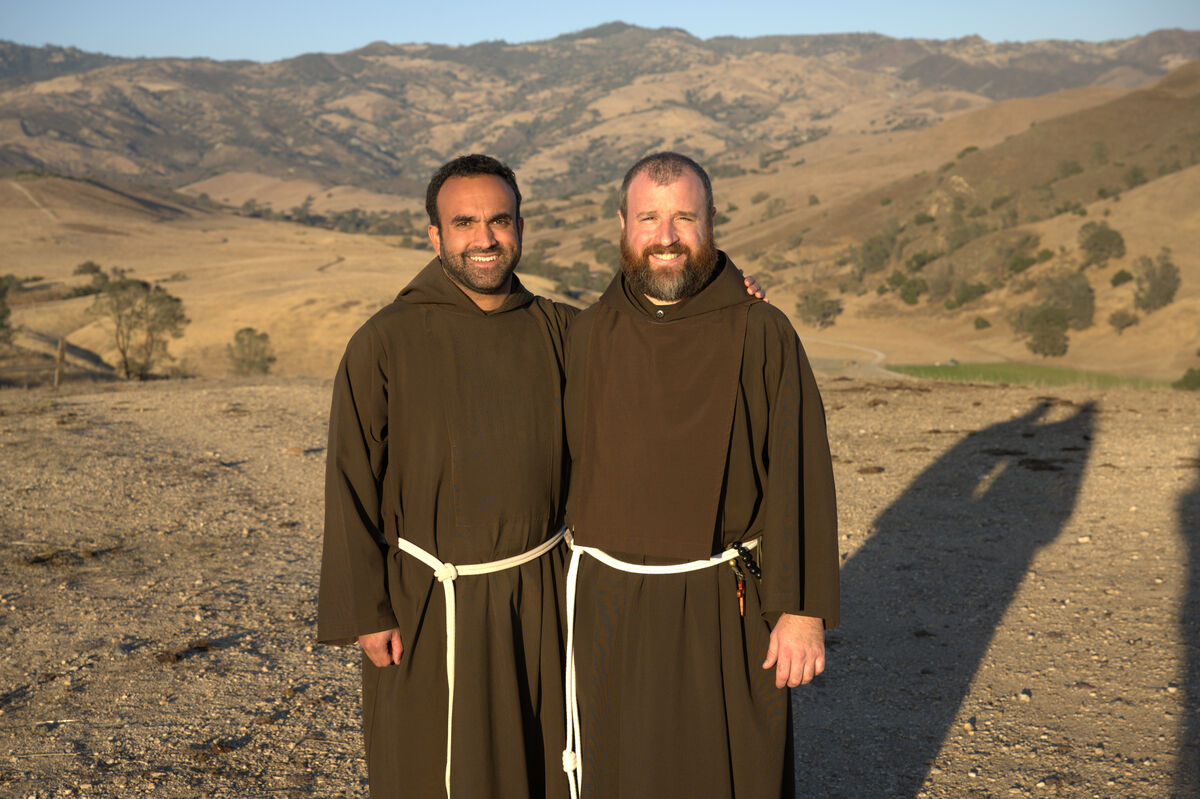
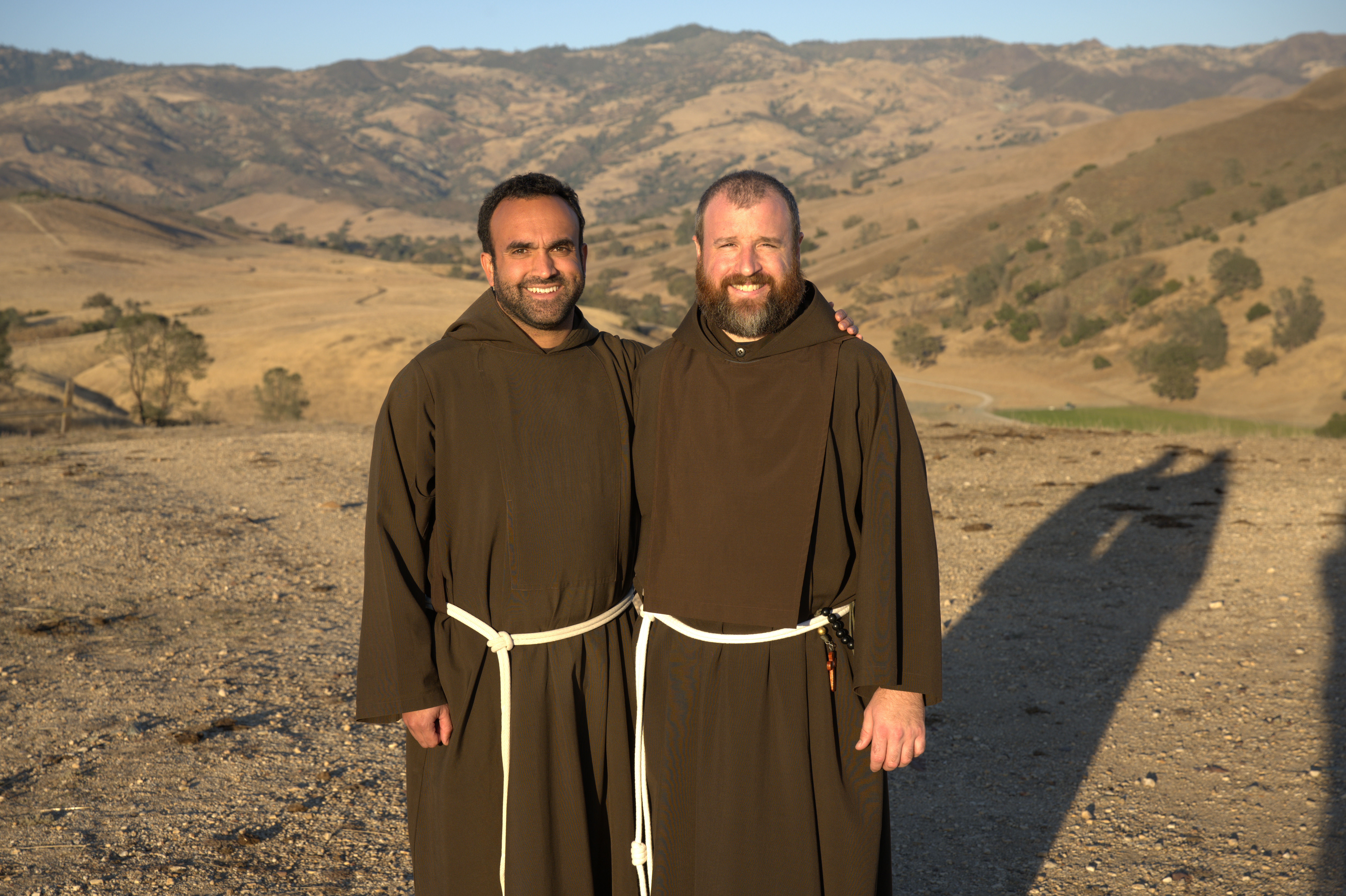
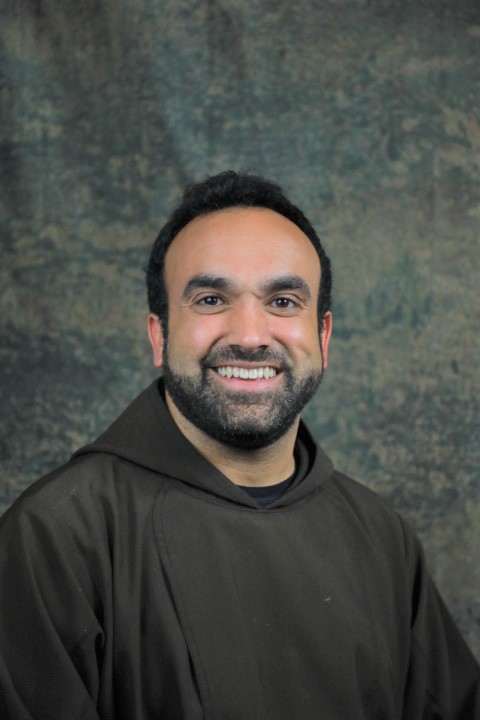
Two of our friars are stationed in Santa Ynez, Calif., at San Lorenzo Seminary, home of the novitiate for the North American Pacific Capuchin Conference. Fr. Will Tarraza is one of three co-directors of the novitiate formation program. Br. Shawn Natola is one of the novices in initial formation. We thank them for sharing their reflections with The Capuchin Journey.
A Look at the Capuchin Novitiate
by Fr. Will Tarraza
 The gift of proclaiming the Gospel of Jesus Christ is the work of all the baptized. Some Christians recognize God’s invitation to devote his/her life to this proclamation by a more intentional and radical witness of Gospel values, often living in communal settings. With numerous possibilities to express one’s call, the Church recognizes different institutions and societies of consecrated life to cultivate unique charisms.
Consecrated individuals (sometimes identified as religious) vow to God in their respective community to live in obedience, chastity, and poverty. As with the vows of matrimony, the Church seeks to seriously prepare individuals to take these vows of consecrated life freely and willingly. For this reason, men and women who feel called to the consecrated life must begin their journey with at least a year of probation. This year is called the novitiate.
Novitiate is a rite of passage for all religious. Each institution or society is responsible for determining what constitutes the nature and process of its own novitiate, according to the order’s values and charisms. The Province of St. Mary assigns our men to partake in a collaborative novitiate program at San Lorenzo Seminary, settled in the majestic Santa Ynez Valley in California. This picturesque location provides a serene and prayerful environment in which the novices can discern God’s call for them. This year of seclusion from the noise and busyness of the world is our investment in the formation of solid men who are committed to living the Gospel, according to God’s will. Whether or not these men go on to profess vows with us as a member of the Capuchin Order, we trust they will make a good discernment. Thus we expect our men to take novitiate seriously, despite the challenges it presents.
Our novitiate is a highly structured program that seeks to reframe a person’s vision of life according to the Franciscan charisms and values. Following postulancy, a novice begins the year by receiving the “clothes of probation,” which is a traditional Capuchin habit with a secondary brown cloth, or caperone, that distinguishes him from those friars who have made vows (the professed brothers). This exciting moment marks the canonical recognition of a man as a member of the Capuchin Order. Here begins a year that holds relatively strict expectations of the novices to maintain the integrity of the “removed” nature of a novitiate. For an entire year, the novices do not leave the confines of the program unless a significant life event occurs, like the death of a relative or the wedding of an immediate family member. The novices are permitted one extended weekend visit from family during the year. They are expected to limit the use of personal time on the Internet to 90 minutes a week, and they are not permitted to have their own personal computers or cell phones. These restrictions may seem authoritarian; but, ideally, they are meant to set novices free from potential distractions that may hinder the work of reframing their vision of life. We want them to see themselves and the world through a new lens of faith.
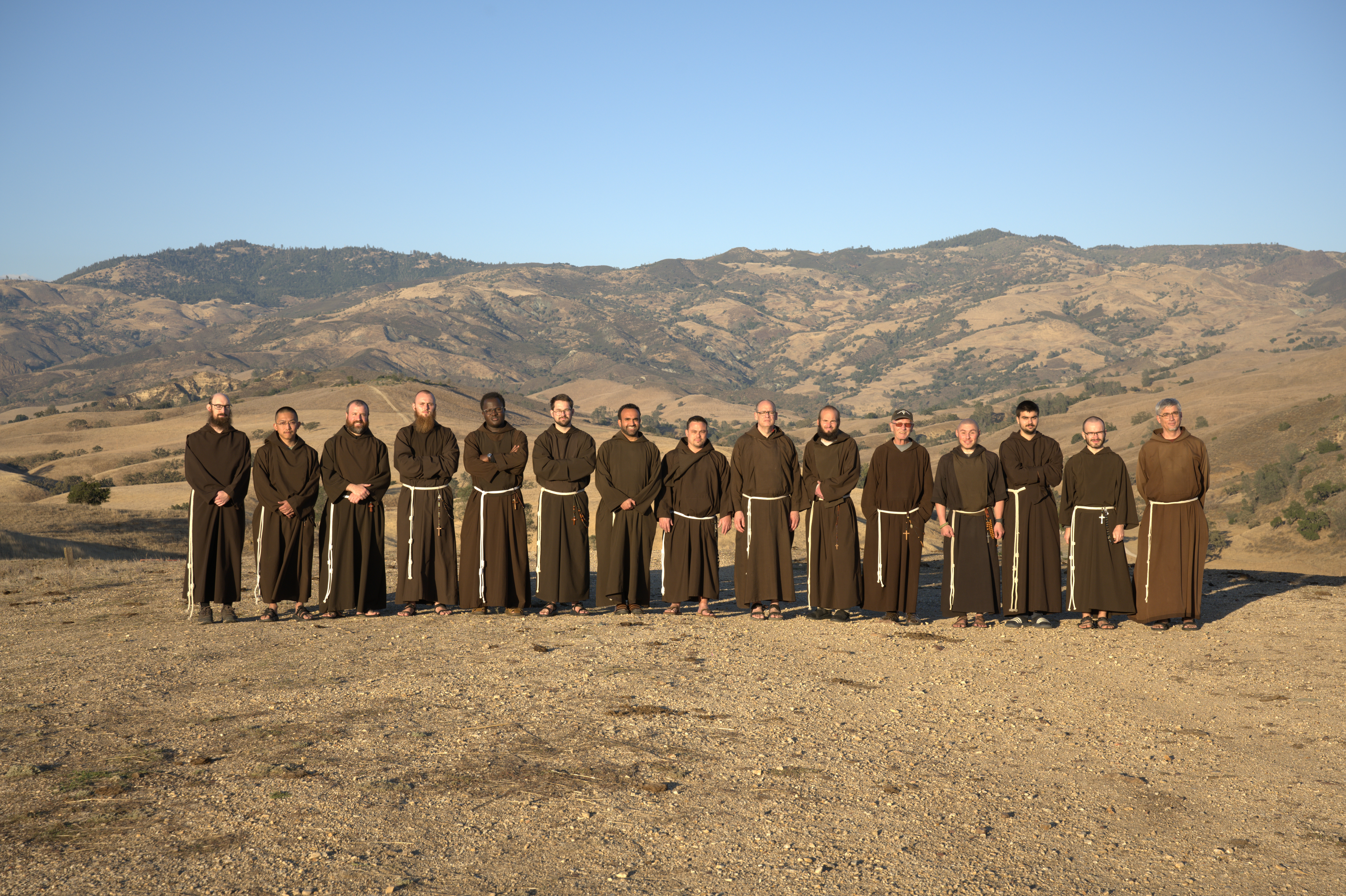
It is the responsibility of the novices to make the choice to adhere to these restrictions under their own freedom. It is my experience that those who take the novitiate seriously (regardless of liking/disliking) are less likely to leave the Order in the future, as these individuals develop skills and tools to succeed in fraternal and ecclesial life as friars.
Every day of the novitiate program is centered in communal times of prayer. We gather four times a day in the chapel to pray the Liturgy of the Hours, meditate together in silence, and celebrate the Mass. The Eucharist, the source and summit of the life of the Church, similarly guides our life as friars. The novice who forms a solid foundation in a life of prayer will direct his future according to the Highest Good, which is God.
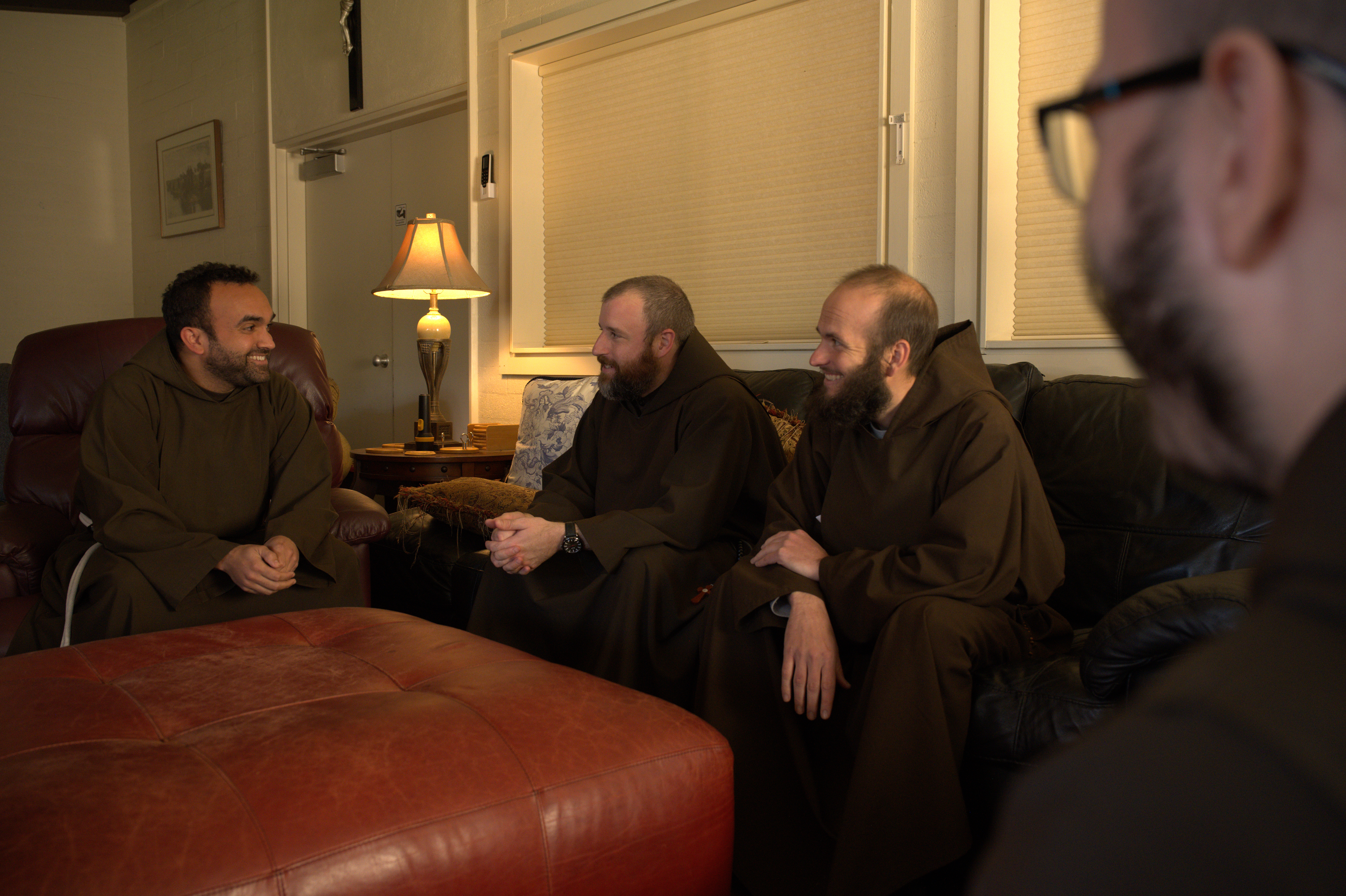
The typical week of a novice is as follows. Three days a week, in the morning, there is class instruction on topics related to the Catholic faith, Franciscan spirituality, Capuchin history, and interpersonal growth. Saint Francis of Assisi praised manual labor; therefore, each novice is responsible for house chores that contribute to the upkeep of the friary. In addition, we set aside two periods a week for work projects on the grounds of San Lorenzo Seminary, including tending the vegetable garden, landscaping, house painting, etc. These work projects not only contribute to the good of the friary but also help to build fraternal bonds among the novices as they work together. We also ask they spend one day in external ministry in service to the poor, vulnerable, intellectually disabled, or sick. The novices are given one day a week to spend away from the friary. We conclude each day in fraternal time of recreation.
There are many other components to the novitiate that provide some variety and deviation from the routine. Hopefully, this brief description of our program captures the intensity of what the Church and the Order asks of these men. They embrace the rigorous nature of the novitiate, trusting in the wisdom and providence of God who has called them to offer their lives as a living sacrifice. The novices and those entrusted with their care rely on your generous prayers and support. Without you, we could not provide this gift to our brothers: to be formed and prepared to vow their lives willingly to God, proclaiming the Gospel as Capuchin Franciscans.
Taking a Road Less Traveled
by Br. Shawn Natola
 I doubt that there was a time when most of the Catholic world had entered a life of “religion.” But much of the Catholic world today has been deeply impacted in its charisms and traditions by that Italian knight of Jesus Christ, St. Francis of Assisi. His passionate belief that the Gospel way of life was not merely an ideal but a true treasure for which anyone of faith could sell all to acquire. Our Lord Himself said, “Be perfect, just as your heavenly Father is perfect” (Matthew 5:48). As Capuchin brothers and sons of our father Francis, we understand these words literally and nobly strive to attain to what they promise.
The novitiate experience is a deep “turning,” is it were, toward that road less travelled. This is not to say that those on the road more often travelled are in any way less noble, holy, fulfilled, or called by God. I only mean to say that, today, few indeed are choosing to take this road. The goal of this journey is to turn back to the Lord; laboring with the Lord in the vineyard of one’s own heart, soul, and mind. So what does it mean to be a Capuchin Franciscan? Why choose this path?
I came to the novitiate with ideas of what life would be like here, what I needed to work on, in what ways I would be challenged, etc. Can you hear God laughing from where you’re reading this? Pope Francis says that God is a God of surprises. My vocation story could be a divine “comedy” of sorts, and my expectations for novitiate were the setup for the latest skit. He is patient with me, and I eventually come around to laughing at myself in the end. How good God is! Again, why choose this path, then? Surely this is more serious than a Three Stooges short!
The blessings of novitiate boil down to a couple of key themes for me. I’ve had to learn to allow my heart to fall in love with God again. While in the world, there are so many distractions and accretions that cover over or crowd out the space that God once occupied in my heart. I’m continually learning how to let others love me as well and see God’s hand in it, especially when doing so requires humility. Out of these themes I am discovering the deeper identity of a Capuchin Franciscan, continual conversion in trust and not fear.
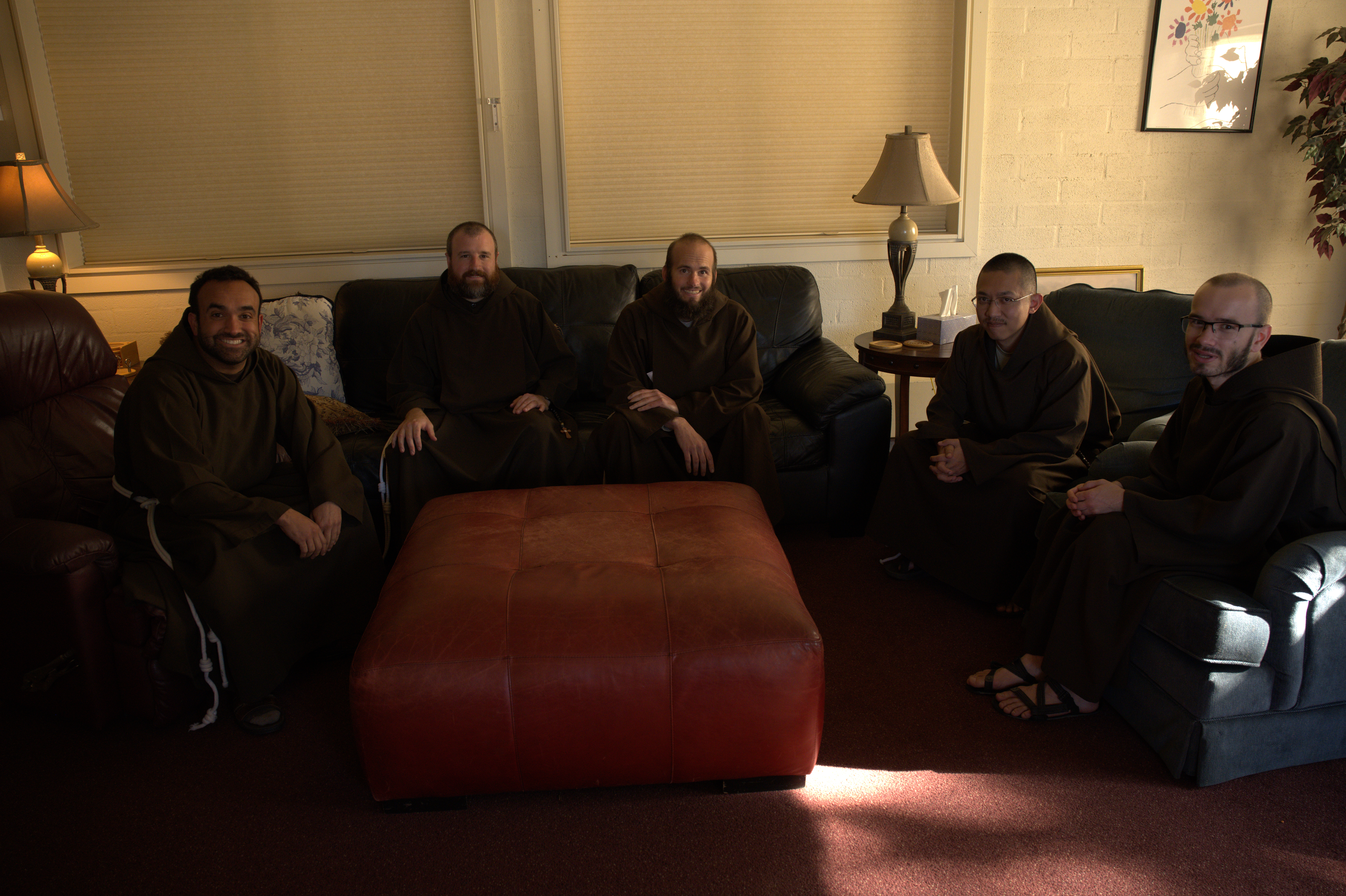
“Behold how good and pleasant, where brethren dwell as one!” (Psalm 133) I’ve considered all that goes into this life, and I recognize that I can have all this elsewhere. And yet there is still something attractive about this life. Allow me to explain. While in the world I had fraternity, ministries, the sacraments, liturgical prayer, and private devotions, I still lacked something, because I held on to my own will, my own possessions, and my selfishness and ego.
What unites this fraternity in its various ministries, the sacraments, the liturgical prayer are the vows that the friars take. To the world, these vows appear restrictive and possibly harmful. What I have discovered in these last 18 months in formation, and especially in the first five months of novitiate, is that these vows can be vehicles that can take us where we never thought we could go, in joy and without fear. What we don’t know can cause fear, which is why I believe so many hesitate or refuse to join religious life today. But perfect love drives out fear (1 John 4:18).
Capuchin Franciscan life is a life of abandonment to divine providence with a family of brothers, who by their joy demonstrate that they indeed have found a pearl of great price. They are like men who have journeyed home from adventures abroad in a land hitherto only spoken of in legends. I love to hear those stories, because I begin to see myself in them, and I dream of what the Lord has in store for my future. I can only do this because I am learning to slowly let go. I am letting go of what I thought I wanted, or what I think this life should be. I am letting go of my pride and letting others love me, especially the beautiful lay people who support our way of life. I am learning to be humble, to be grateful to God that I don’t have to travel this road alone … for then the Lord gave me brothers!