




|
by Fr. Gerard Mulvey
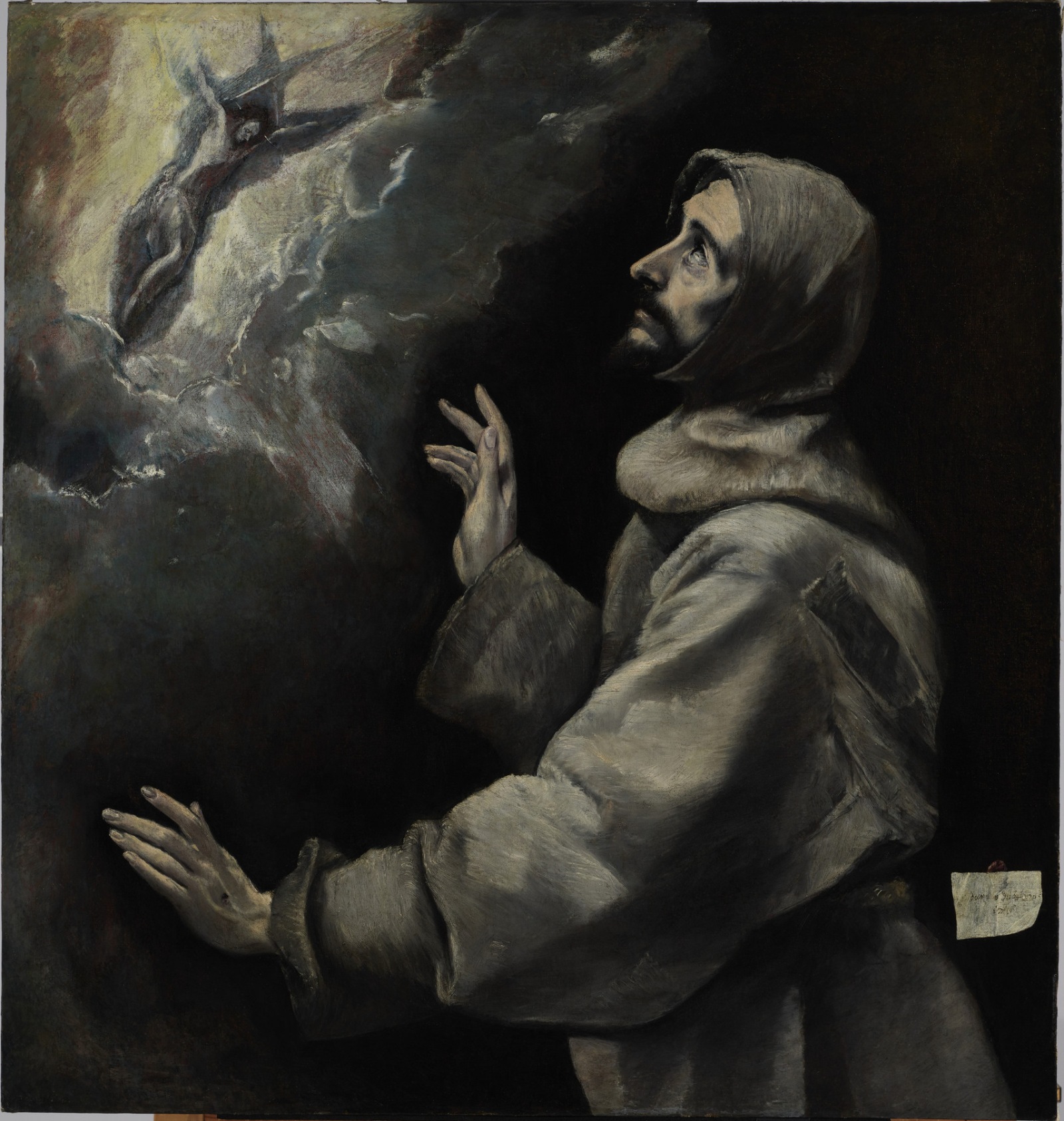
El Greco, "Saint Francis Receiving the Stigmata," oil on canvas, 1585. “There is one path to God, through the burning love of the Crucified.” St. Bonaventure, The Soul’s Journey Into God “...conform your life to the Mystery of the Lord’s Cross.” from the Rite of Ordination to the Priesthood In September 1224, two years before he died, Francis of Assisi received the wounds of Christ during a period of intense prayer on Mount La Verna. On Sept. 17, the feast of the Stigmata of St. Francis, Franciscans around the world began a season of commemoration for the 800th anniversary of this miraculous event. This is a time to remember an event that speaks not only of the holiness of the Poverello of Assisi but also of our Franciscan vocation to follow Christ crucified each day in prayer, in community, and in service. I invite you to take some time to contemplate this mysterious event. Read the accounts in the legends of St. Francis written by Thomas of Celano or St. Bonaventure. A Vision and Mystical Union Imagine Francis in solitude and in prayer on La Verna. He is contemplating the Cross and the Passion of Christ. It is around the feast of the Exaltation of the Cross. According to the legends, Francis has a vision of a seraph with six wings nailed on a cross. The vision moves Francis into deep prayer. It is a moment of profound union with the crucified Lord, who Francis had longed to follow and live for completely. When the vision was over, Francis was marked with fleshy nail prints in his hands and feet, and his side was pierced. He kept these wounds a secret, as best as he could. Only a few friars were aware of what happened. By the time of Francis’ death, some other friars, Clare of Assisi, and a few others had seen the wounds. They were regarded as a great wonder, Brother Elias wrote at the time of Francis’ death. For many, the wounds were seen as a divine approval of Francis’ legacy, analogous to the papal confirmation of Francis’ rule for his Order of Lesser Brothers in 1223. But the stigmata were more than an approval of the Rule or of Francis himself. The stigmata were a manifestation of Francis’ union with the crucified Lord. They manifested his deep desire to unite himself continuously with the Lord. A Time of Pain Some scholars say that Francis went to La Verna at a very painful time in his life. He had ceded leadership of the Order he founded and was dismayed at where the Order was going. He felt that it was drifting from the original inspiration he shared with the first friars. Also, he was saddened at the news of another crusade to the Holy Land. He had witnessed the violence and bloodshed of the Fifth Crusade. He was concerned about the welfare of Sultan Malik al-Kamil, whom he befriended when he attempted to make peace at Damietta in 1219. All this led Francis to seek the hermitage in La Verna to devote himself to prayer and solitude. He sought strength by reading the Gospels and contemplating the mystery of the Cross. That prayer manifested itself in his own bodily sharing in the wounds of Christ. “Francis became what and to whom he was praying,” writes Franciscan Fr. Michael Cusato. The Message of the Stigmata What does this wonderful yet mysterious event say to us 800 years later? How does it challenge us in our daily life as Capuchin friars, as religious, and as laity? Over the years, the two quotations above have inspired me to pattern my life after Christ crucified, as a Capuchin friar and a priest. The quote from St. Bonaventure often guides me through the liturgies of Holy Week, especially on Good Friday. These words from the Rite of Ordination have often come to mind during difficult moments in ministry. These quotes speak to me about the life and spirit of St. Francis as we celebrate the 800th anniversary of his stigmata. The Soul’s Journey Into God speaks of Francis’ ardent love and desire to follow the poor and crucified Christ. Francis was not a priest, but he sought to conform his life, his work, and ultimately his death to the mystery of the Lord’s Passion and Cross. Francis sought to follow the poor and crucified Christ in everything he said and did. It is reflected in his writings, his service to the lepers, his work for peace and reconciliation, and finally in his illness as well as his death. The Gospel reading for the feast of the Stigmata of St. Francis is Luke 9:23-26. The Lord tells us that if we wish to follow Him, we must take up our cross each day. What is that cross in our lives? In our work? Is it problems in the home or community? Is it personal issues with health? The cross will vary for each one of us, but we are called to carry it faithfully. Suffering and Strength Francis suffered much toward the end of his life. He had several physical ailments. He was dismayed at the direction the Order was taking. The crusades and other crises in the Church and the world weighed down upon him. Yet he remained faithful to the Lord who called him to rebuild the Church. He found strength in the support and prayers of his close friends like Brother Leo and Sister Clare. He found strength in the Eucharist and the Gospels. He experienced grace in solitude—in being alone with his Crucified Love. Francis left us a legacy of prayer. It is in those moments of prayer that we come to know as he did the burning love of the Crucified. As we celebrate the 800th anniversary of the Stigmata of St. Francis, may we enter into the mystery of the life-giving Cross and be transformed by that burning Love. For Further Reading Bonaventure. “The Major Legend of St. Francis.” In Francis of Assisi: Early Documents, vol. 2, pp. 630-639 (Regis Armstrong, Wayne Hellman, and William Short, eds.). New York: New City Press, 2000. Cusato, Michael. Francis of Assisi: His Life, Vision and Companions. London: Reaktion Books, 2023. Delarun, Jacques, et al. The Stigmata of Francis of Assisi: New Studies, New Perspectives. St. Bonaventure, N.Y.: Franciscan Institute Publications, 2006. Vauchez, André. Francis of Assisi: the Life and Afterlife of a Medieval Saint. New Haven, Conn.: Yale University Press, 2012. |
We Contemplate the Stigmata of St. Francis